

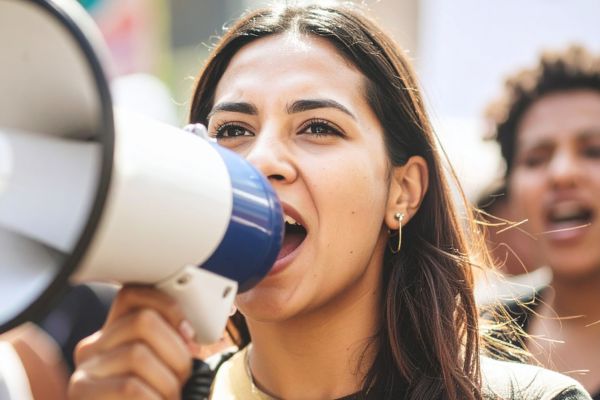
Student free speech rights have always existed in a delicate space. Schools are places of learning, authority, and structure, but they are also environments where young people form opinions, challenge ideas, and begin to understand their role in a democratic society. That tension between order and expression has shaped decades of debate, court rulings, and public discussion.
Today, student free speech rights are more relevant than ever. Social media, political polarization, and cultural change have brought student expression into the spotlight. What students say, wear, post, or protest can quickly spark controversy. Understanding where the boundaries lie is not just a legal issue; it is a civic one.
This article explores how student free speech rights work in practice, why they matter, and how they continue to evolve in modern schools.
What Student Free Speech Rights Actually Mean
At its core, student free speech rights refer to the ability of students to express their ideas, opinions, and beliefs without unnecessary or unfair punishment from school authorities. This includes spoken words, written expression, symbolic speech, clothing choices, and even silence in some contexts.
However, student free speech rights are not identical to the rights enjoyed by adults outside school. Schools are legally allowed to place certain limits on expression to maintain a safe, functional learning environment. The challenge lies in determining when a restriction protects education and when it crosses into censorship.
Free speech in schools exists within boundaries, but those boundaries are not as narrow as many assume. Students do not surrender their voices when they walk through school doors.
The Historical Roots of Student Free Speech
The modern understanding of student free speech rights did not emerge overnight. It developed gradually as courts were asked to weigh student expression against school authority.
Historically, schools operated under the assumption that administrators had near-total control over student behavior and speech. Expression was often viewed as a privilege rather than a right. Over time, students and families challenged this idea, arguing that constitutional protections should not disappear in educational settings.
These challenges reshaped how student rights were viewed, establishing the principle that students are citizens with voices worth protecting. That shift continues to influence how schools approach speech-related issues today.
Expression Inside the Classroom
The classroom presents a unique environment for free speech. Teachers are responsible for guiding discussion, maintaining focus, and ensuring that lessons meet educational goals. This gives schools greater authority to regulate speech during instructional time.
That said, student free speech rights still apply. Students can ask critical questions, challenge ideas respectfully, and express differing viewpoints as part of academic discourse. Healthy debate is often essential to learning.
Problems arise when expression disrupts instruction, targets individuals, or interferes with the educational process. Schools are generally allowed to intervene in those situations, but they must be careful not to silence viewpoints simply because they are unpopular or uncomfortable.
Clothing, Symbols, and Personal Expression
What students wear has long been a flashpoint in discussions of free speech. Clothing can carry political messages, religious symbolism, or social commentary. In many cases, these choices fall squarely within student free speech rights.
Schools may impose dress codes, but those policies cannot arbitrarily suppress expression. Restrictions typically need a clear connection to safety, order, or educational purpose. A shirt expressing an opinion is different from clothing that incites violence or targets a specific group.
Personal expression through appearance often feels deeply personal to students. When schools handle these issues thoughtfully, they reinforce respect for individuality while maintaining shared standards.
Student Speech Beyond School Grounds
One of the most complex questions surrounding student free speech rights involves speech that happens off campus. Social media has blurred the line between school life and personal life, making it harder to determine where school authority begins and ends.
Students often express opinions online, sometimes about school policies, teachers, or peers. While schools may feel pressure to respond to controversial posts, their authority is more limited when speech occurs outside school property and hours.
In general, schools must show a strong connection between off-campus speech and substantial disruption to the school environment before taking action. This standard reflects an effort to balance student rights with the realities of modern communication.
Protests, Walkouts, and Collective Expression
Student activism is a powerful form of expression. Walkouts, protests, and demonstrations have become common ways for students to express concerns about social issues, safety, or school policies.
Student free speech rights protect peaceful protest, but schools may still enforce reasonable rules. For example, schools can regulate timing, location, and supervision to ensure safety and minimize disruption.
When schools engage students in dialogue rather than punishment, activism can become a learning opportunity. It teaches civic responsibility, critical thinking, and respectful disagreement, values that extend far beyond the school environment.
Limits on Student Free Speech
It is important to acknowledge that free speech rights, including those of students, are not absolute. Certain types of expression are not protected in schools.
Speech that threatens violence, promotes illegal activity, or constitutes harassment may be restricted. Schools also have a responsibility to protect students from bullying and discrimination, which can sometimes conflict with claims of free expression.
The key issue is intent and impact. Schools must evaluate whether speech poses a real harm or disruption rather than reacting to discomfort or controversy alone.
Why Student Free Speech Rights Matter
Student free speech rights are not just about legal technicalities. They shape how young people learn to engage with the world.
When students are allowed to express ideas, even imperfectly, they develop confidence and critical thinking skills. They learn how to defend their views, listen to others, and navigate disagreement. These experiences prepare them for participation in a democratic society.
Suppressing student voices, on the other hand, can foster resentment, disengagement, and fear of speaking up. Education thrives in environments where curiosity and dialogue are encouraged, not stifled.
The Role of Educators and Administrators
Teachers and administrators play a crucial role in shaping how student free speech rights are experienced. Policies alone cannot create a culture of respect. How rules are enforced matters just as much as what those rules say.
Educators who model open-mindedness and fairness help students understand the value of expression. Clear communication about expectations and boundaries reduces conflict and confusion.
When schools approach speech issues with empathy and consistency, they build trust. Students are more likely to respect limits when they feel heard and understood.
Navigating Free Speech in a Changing World
The landscape of student free speech rights continues to evolve. New technologies, shifting cultural norms, and emerging social issues constantly test existing frameworks.
Schools face pressure from parents, communities, and media, often all at once. In these moments, it is tempting to choose quick solutions rather than thoughtful ones. Yet the long-term impact of speech restrictions can be profound.
Preparing students to live in a diverse, expressive society requires patience and nuance. Free speech is not always comfortable, but discomfort can be a powerful teacher.
A Reflective Conclusion on Student Free Speech Rights
Student free speech rights sit at the intersection of education, law, and democracy. They remind us that schools are not just places to absorb information, but spaces where future citizens learn to use their voices.
Balancing expression with order is never simple. Each generation faces new challenges, from social media controversies to political activism. Still, the core principle remains the same: students deserve respect as thinkers and individuals.
When schools protect student free speech rights while fostering responsibility and empathy, they do more than follow the law. They nurture informed, confident, and engaged members of society.